
Please Choose Your Language
Views: 0 Author: Site Editor Publish Time: 2025-12-09 Origin: Site


Unexpected downtime in your 5-axis CNC machining center creates significant challenges. AI-driven predictive maintenance offers a powerful solution. It can reduce your downtime by a remarkable 40%. This directly prevents costly production halts. You maintain continuous operations and boost your output immediately.
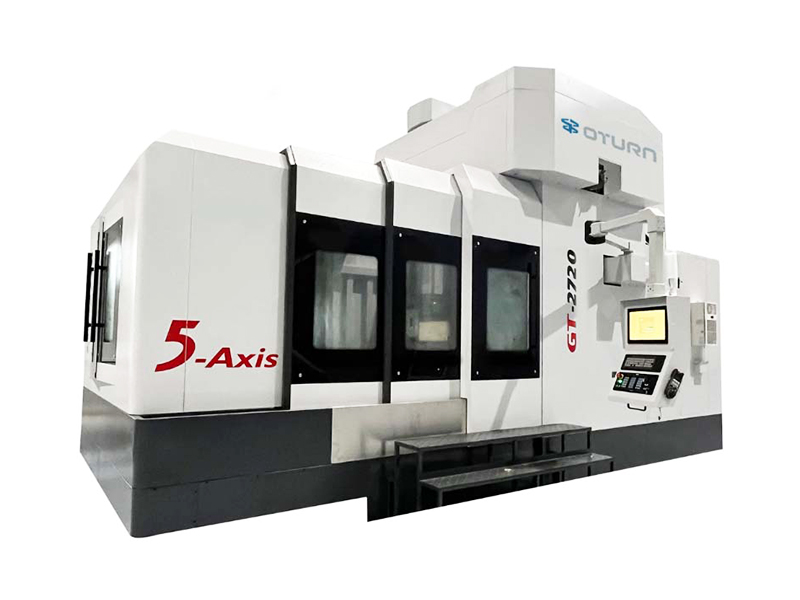
AI-driven predictive maintenance helps 5-axis CNC machines. It reduces unexpected stops by 40%. This keeps your machines running.
AI uses real-time data from sensors. It predicts when parts might fail. This allows you to fix problems before they happen.
Using AI for maintenance saves money. It makes machines last longer. It also improves the quality of what you make.
You rely on 5-axis CNC machining centers for complex, high-precision manufacturing. These advanced machines move turning tools along five different axes simultaneously. This capability allows you to produce intricate parts with exceptional accuracy. Industries like aerospace, medical, and automotive depend on their continuous operation. Your ability to create sophisticated components directly links to their uptime.
Unplanned downtime in your operations carries significant financial burdens. When a machine stops unexpectedly, you face immediate losses. These losses include idle labor, missed production targets, and potential rush order fees. Consider the impact on your Overall Equipment Effectiveness (OEE). OEE measures your manufacturing productivity.
OEE includes three key indicators: performance, availability, and quality.
The availability indicator specifically tracks the percentage of planned time your machine operates. It also measures time lost due to unplanned downtime.
Unplanned downtime directly reduces your availability indicator.
Insufficient availability hurts your firm the most among all OEE components.
Beyond direct costs, unplanned downtime severely impacts your production schedule. You might miss critical deadlines, leading to customer dissatisfaction and potential contract penalties. Your overall output decreases, affecting your ability to meet market demand. This ripple effect ultimately erodes your profitability. Maintaining continuous operation is vital for your competitive edge and financial health.
You need to understand predictive maintenance with AI. It represents a significant leap from traditional maintenance approaches. Unlike proactive maintenance, which often relies on historical failure analysis, predictive maintenance uses real-time data analysis and machine learning algorithms. This allows you to forecast dynamic failures. You perform maintenance only when truly necessary, avoiding premature or delayed interventions. This approach ensures your machines run optimally.
AI plays a crucial role in predicting machine health. It continuously records and analyzes data from your machines. This includes vital metrics like temperature, vibration, or power consumption. AI algorithms and models then process this information. They determine when a component is likely to fail. This system uses predictive analytics to identify patterns in data, indicating impending failures. It also employs intelligent diagnostics, where AI-supported systems provide complex diagnoses and recommend specific maintenance measures. Furthermore, self-learning systems adapt from operational data, optimizing performance and reliability over time.
An effective AI-driven predictive maintenance system requires several core components. You need robust hardware, including IoT devices such as sensors for vibration, temperature, pressure, and noise. Smart meters, IoT gateways, actuators, and programmable logic controllers (PLCs) are also essential. Data acquisition systems transmit and process the collected data. Connectivity devices, using wired networks, 5G, or Wi-Fi, forward this data for analysis. On the software side, you utilize data analysis software and AI/machine learning algorithms. An AI-driven knowledge base is also a key software component. It supports failure prediction and faster problem-solving. This knowledge base stores detailed information about past failures and corrective actions, providing an accessible resource for your team.
You can significantly reduce downtime in your operations. AI-driven predictive maintenance provides the tools to achieve a 40% reduction. This involves a systematic approach to data, analysis, and proactive intervention.
You must first establish a robust system for real-time data collection. This forms the foundation of effective predictive maintenance. Your 5-axis CNC machining center generates vast amounts of operational data. You need to capture this data continuously. Critical sensors provide essential insights into machine health.
Vibration sensors detect unusual movements.
Temperature sensors monitor heat levels in components.
Load sensors measure stress on parts.
Pressure sensors track hydraulic or pneumatic system performance.
Real-time vibration and temperature monitoring are crucial. They help you prevent tool wear or failure in your CNC machines. Integrating sensors for spindle vibration, temperature, and load allows for the early detection of anomalies. This is vital for your predictive maintenance strategy. You gain immediate visibility into your machine's condition.
AI algorithms are essential for processing the collected data. They differentiate between normal operational variations and actual anomalies. These anomalies indicate potential failure. AI leverages real-time monitoring data from your machines and processes. For instance, a novel method enhances resilience in smart manufacturing. It integrates data from micro and meso levels within precision machining production plants. This approach uses real-time data from machines and machining processes for risk assessment and early anomaly detection. It aims to minimize the impact of unexpected failures. This method was validated using a milling machine. It demonstrates the significance of real-time data and health assessment in developing resilient industrial systems. Deviations from expected real-time data patterns, established during normal operation, are flagged as potential anomalies.
In industrial robotic assembly, AI algorithms, specifically variational autoencoders, differentiate anomalies. They identify data patterns that deviate from expected behavior. For an industrial cabling task, an anomaly detection model used force measurements and robot end-effector positions as inputs. It used data from both nominal processes and various failure scenarios. This model achieved an AUROC of 0.93 in detecting a process-related failure. This indicates its ability to distinguish between normal operational variations and actual failures.
Once AI identifies anomalies, predictive analytics takes over. You move beyond simply detecting issues. You forecast when a component will likely fail. AI algorithms learn from historical data. They accurately predict potential breakdowns. This enables proactive intervention. You can anticipate problems before they escalate into costly failures. This foresight allows you to schedule maintenance precisely when needed. You avoid both premature replacements and catastrophic breakdowns. This capability transforms your maintenance strategy from reactive to truly predictive.
AI optimizes your maintenance schedules. It minimizes disruption while maximizing machine uptime. AI-enabled sensors and data analytics predict when components are most likely to fail. This moves you beyond traditional fixed-interval maintenance. You prevent critical moment breakdowns. Parts are repaired or replaced only when necessary. This reduces unnecessary servicing.
AI offers several key benefits for maintenance optimization:
Anticipates Failures: AI predicts component failure likelihood.
Prevents Breakdowns: You replace parts only when needed.
Cost Savings: You achieve lower maintenance costs. This results from reduced downtime, higher asset value, prolonged equipment lifespan, and optimized labor and spare parts.
Improved Accuracy and Reliability: Machine learning models continuously evolve. They enhance the accuracy and reliability of predictions.
Optimizes Service Uptime and Asset Performance: AI improves long-term asset performance and safety. It increases overall industrial operational efficacy.
AI systems continuously gather data from sensors. They detect subtle anomalies indicating impending failures. AI algorithms learn from historical data. They accurately forecast potential breakdowns. This enables proactive intervention. AI fine-tunes maintenance schedules based on actual equipment performance. This ensures repairs and replacements occur only when necessary. You avoid both over- and under-maintenance. This minimizes unexpected breakdowns and optimizes resources. AI reduces costly downtime, extends equipment lifespan, and improves operational efficiency.
| KPI | Goal | Progress |
|---|---|---|
| Machine Downtime | Increase uptime by 10-15% | Achieved a 66% reduction in breakdowns, significantly increasing uptime |
| Cost of Spare Parts | Reduce costs by 10-15% | Attained an 80% reduction in spare parts costs |
| Maintenance Planning Time | Cut down planning time by 60-70% | Reduced planning time from 3-4 hours to 10-15 minutes |
| Breakdown Rate | Decrease breakdown rate by 5-10% | Lowered breakdown rates by 5.1% in the selected period |
You gain many advantages beyond just reducing downtime. AI-driven predictive maintenance transforms your entire operation. It brings significant improvements across the board.
You will see substantial cost reductions. AI-powered predictive maintenance delivers an impressive return on investment. It can achieve an ROI of 10:1. McKinsey estimates that predictive maintenance can reduce your maintenance costs by 10-40 percent. You save money by avoiding emergency repairs and optimizing spare parts inventory.
You extend the life of your valuable machinery. AI-driven predictive maintenance identifies when components need replacement before they fail. Machine learning and real-time sensor monitoring power this. You address potential issues early. This reduces downtime and significantly extends your equipment's operational lifespan. Your machines perform better for longer.
You produce higher quality parts. Smart manufacturing tools, including predictive maintenance, improve production output by 10–20%. Faster anomaly detection drives this improvement. Real-time machine data acquisition helps you avoid expensive scrapped parts. For example, you can detect intermittent coolant pump pressure losses. This prevents defects and ensures consistent product quality.
You optimize your entire workflow. AI predictive maintenance enhances the efficient allocation of personnel and resources. It automates maintenance strategies. This enables proactive approaches. You get precise insights into equipment performance through real-time data analysis. This leads to optimized maintenance scheduling. You ensure tasks are performed at optimal times. This means more efficient operations and better resource use.
You are ready to implement AI predictive maintenance. This process requires careful planning. You will transform your operations.
You begin by integrating data. You deploy sensors on your machines. This includes your 5-axis CNC machining center. These sensors collect vital operational data. This data feeds into your AI system. You capture real-time information. This includes vibrations, temperatures, and power consumption. This forms the foundation for accurate predictions.
You need to select an AI platform. This platform must handle large data volumes. It should also offer robust analytics. Consider platforms that integrate easily with your existing systems. Look for user-friendly interfaces. The right platform simplifies data visualization. It also streamlines maintenance task management.
You must train your team. Operators and maintenance personnel need new skills. They learn to interpret AI insights. They understand how to act on AI predictions. This ensures successful adoption. Your team becomes proficient in using the new tools. This maximizes the benefits of the system.
You implement AI predictive maintenance in phases. First, you conduct an equipment audit. Identify machinery with high failure rates. Next, you install IoT sensors. Retrofit your existing legacy machines. This avoids full production line replacement. Then, establish centralized data collection. This creates a unified data pipeline. It enhances prediction accuracy. After that, train your AI model. Focus initial training on high-value equipment. This demonstrates ROI. Integrate the system with your existing ERP, MES, and CMMS. This automates workflows. Finally, train your team. Ensure operators and maintenance personnel understand AI insights. They learn how to act upon them.
You can see the tangible impact of AI-driven predictive maintenance in various industries. These real-world examples demonstrate how businesses achieve significant downtime reductions. They also show how companies improve operational efficiency.
Aerospace manufacturers demand extreme precision and reliability. You need your 5-axis CNC machines to operate flawlessly. One aerospace component manufacturer implemented AI predictive maintenance. They integrated sensors across their machining centers. The AI system analyzed vibration and temperature data in real-time. This allowed them to predict spindle bearing failures weeks in advance. You can now schedule maintenance during planned downtimes. This proactive approach reduced unplanned machine stoppages by 35%. It also ensured consistent part quality for critical components.
Automotive parts production relies on high-volume, continuous operation. Implementing AI predictive maintenance here brings unique challenges. You often face:
Data Fragmentation: Data scatters across many systems. This makes a holistic view difficult.
Data Quality: Ensuring accurate and consistent data is crucial. Legacy systems often lack necessary sensors.
Integration with Existing Systems: Merging AI with older infrastructure requires custom solutions.
Skills Gap: Your staff may lack expertise in AI and data analytics. Training employees becomes a significant hurdle.
Despite these hurdles, one automotive supplier successfully deployed AI. They focused on critical powertrain component machining. The system identified early signs of tool wear and hydraulic system issues. This led to a 42% reduction in unexpected machine breakdowns. You can now maintain production schedules more reliably.
You can clearly quantify the return on investment (ROI) from AI predictive maintenance. This involves tracking several key metrics. You measure the reduction in unplanned downtime. You also calculate savings from fewer emergency repairs. Optimized spare parts inventory further contributes to ROI. Many companies report an ROI of 10:1. This means for every dollar invested, you gain ten dollars in return. This makes AI predictive maintenance a financially sound decision for your operations.
You transform your 5-axis CNC machining center operations with AI-driven predictive maintenance. This offers a strategic advantage, reducing downtime by 40%. Embracing this technology ensures your future manufacturing competitiveness. You gain efficiency and maintain a leading edge.
You use AI to analyze real-time machine data. This forecasts potential failures. You perform maintenance only when necessary.
AI detects anomalies early. It predicts component failures. You schedule maintenance proactively. This prevents unexpected breakdowns.
You gain significant cost savings. Your machines perform better. Product quality improves. You achieve greater operational efficiency.


